Machinery Engineering and Supply Scope
Mechanical assemblies, product connections, controls and the documents that define an individual machine or connected equipment package.
From component to connection
Specify the assembly
and its place in the line.
A crusher has a feed and discharge arrangement. A tank needs a pump and an operating level. A filling head must accept the treated stream and the selected bag fitment. The engineering scope joins those physical requirements.
For a single-machine order, the connection drawing identifies the boundary. A connected package also assigns joining pipework, valves, instruments, cabling and site services.
Assembly detail
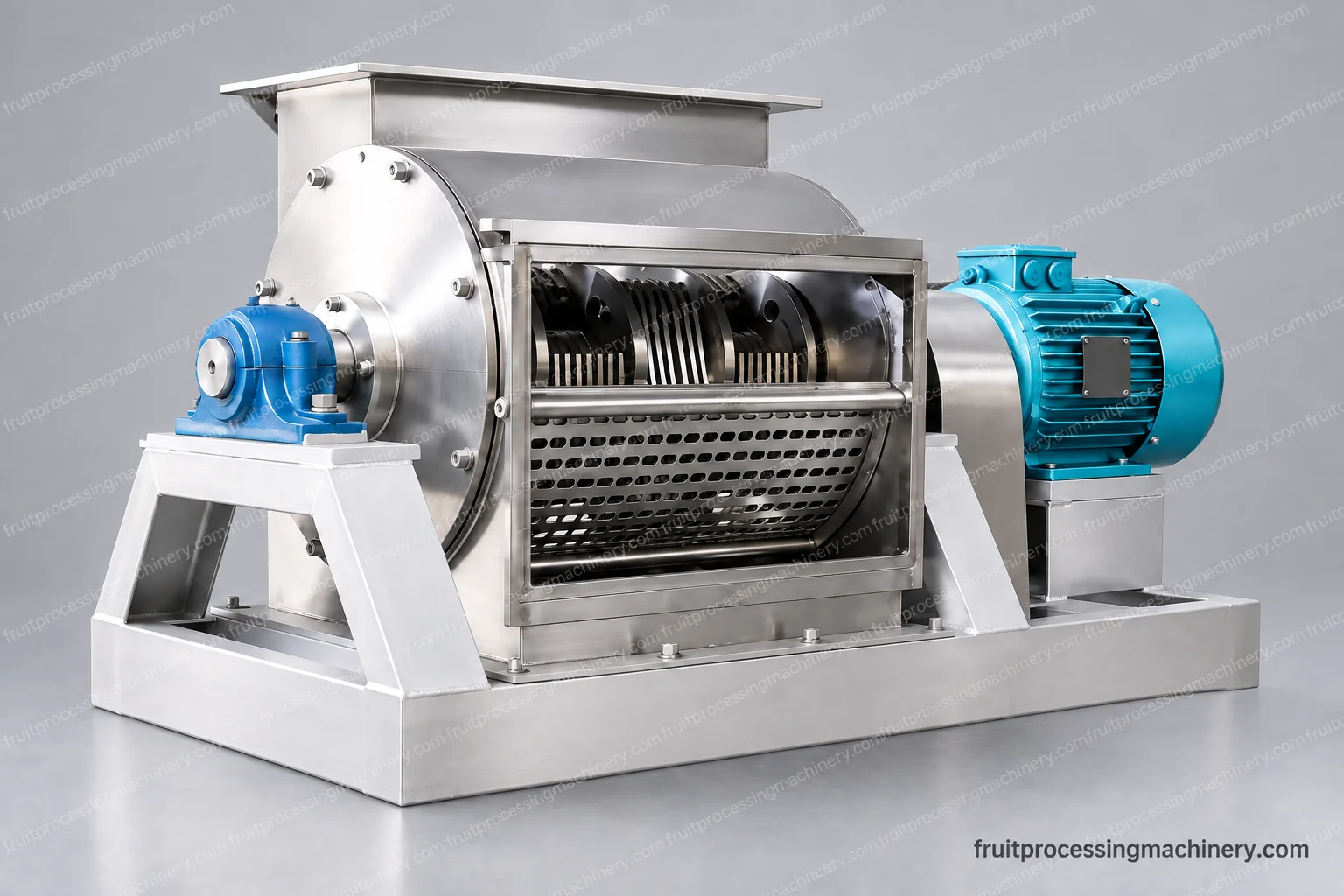
Three views that matter to the specification
Fruit preparation & recovery
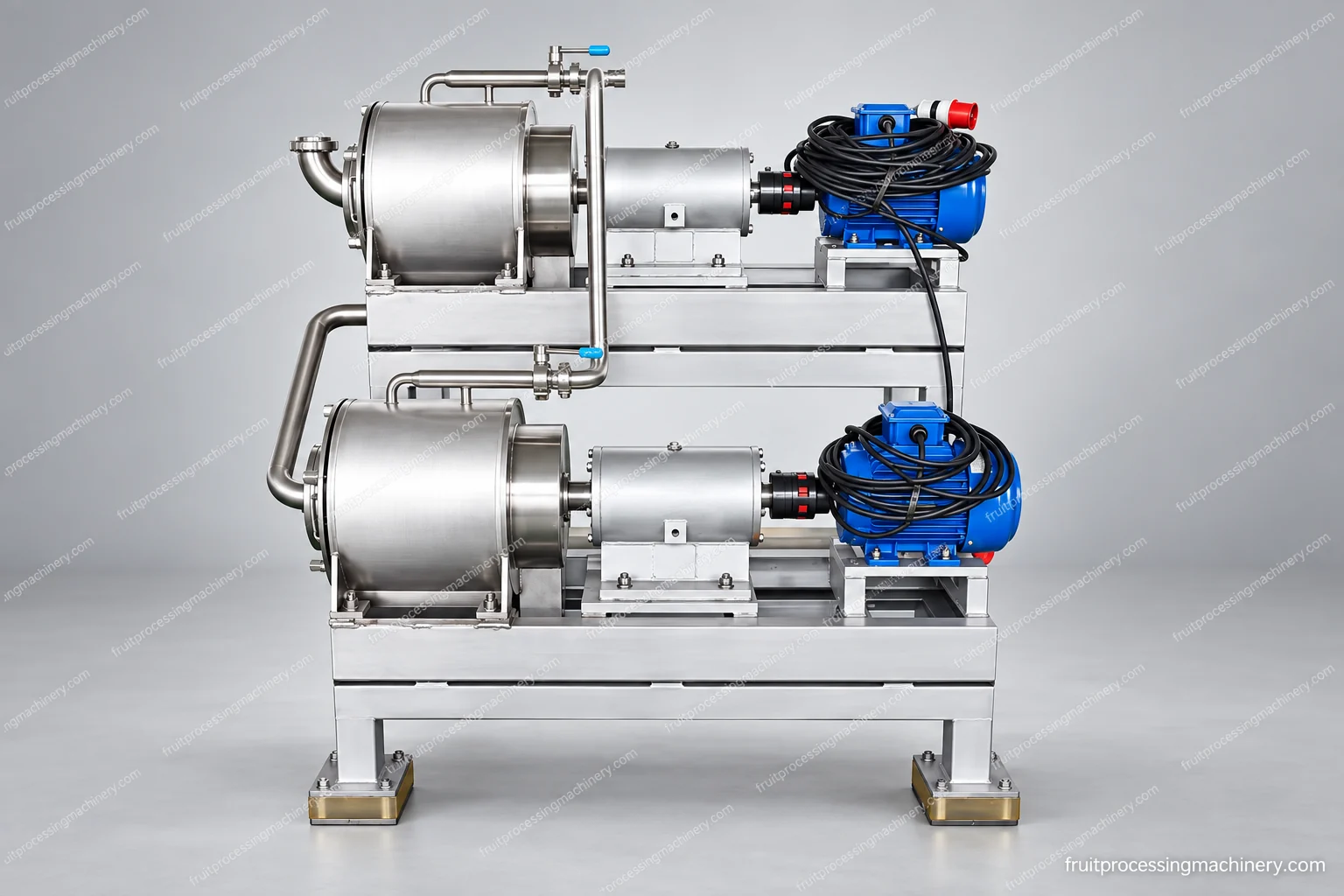
Two-stage Pulper and Refiner
Recover pulp, then refine texture
Machine details ↗Cleaning & line controls
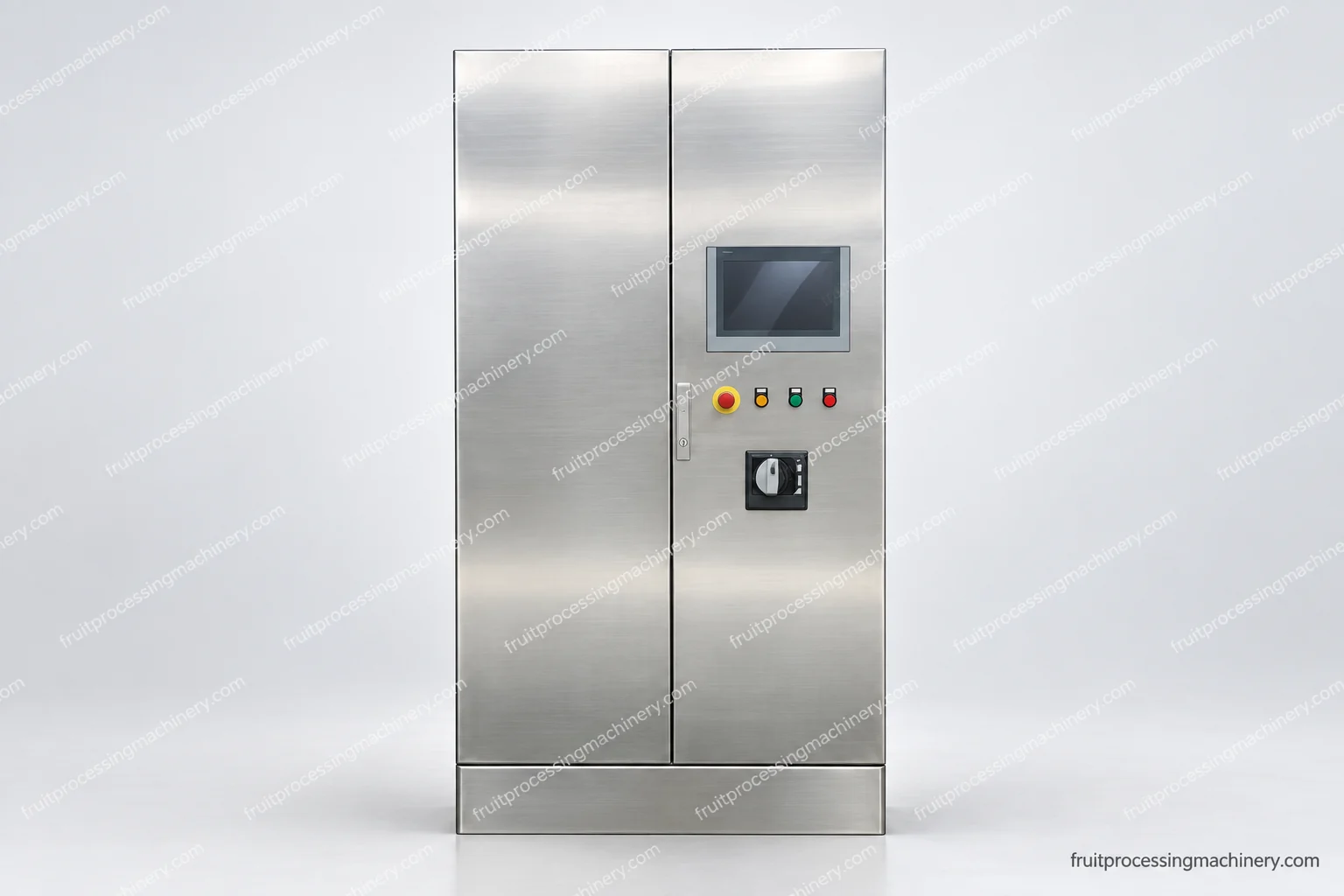
Production Line Control Cabinet
Operate the connected equipment
Machine details ↗Mechanical interfaces
Set feed and outlet elevations, opening envelopes, reject removal and the route into the next hopper or vessel. Keep maintenance access in the layout after every joining conveyor and pipe has been added.
Product and utilities
Define whole fruit, prepared mash, screened pulp or extracted juice at each handoff. Select pumps and passages for that stream, then schedule electricity, water, heating, cooling and drainage.
Control ownership
List local machine protections, line requests, measurements and the source of each signal. Define receiver-stop, invalid-measurement and cleaning-transition behavior within the functional design.
Documented supply scope
What the equipment schedule brings together
| Scope item | Define with the selected equipment |
|---|---|
| Machine assembly | Configuration, contact parts, drives, access and offered duty conditions |
| Joining equipment | Conveyors, product/reject receivers, pump and valve paths |
| Site interface | Floor layout, services, drainage and tie-in responsibilities |
| Electrical and controls | Field-device list, connections, functions and operator interface |
| Acceptance and handover | Agreed checks, test material, drawings, backups and responsibilities |
FAT and SAT are agreed test scopes. A drawing review, dry functional check and product run prove different things; their results belong to the actual ordered equipment.
Read the FAT/SAT framework →Service around the machinery
Connect new equipment or change an existing line
New-line integration
Define each machine handoff before separate equipment quotations become a production system.
Existing-line expansion
Locate the constraint with synchronized observations before buying a faster machine.
Automation retrofit
Make machine states and ownership explicit without assuming that different controllers already speak the same language.
Production and cleaning changeover
Review product removal, cleaning paths and release-to-production as one defined transition.