Fruit preparation & recovery
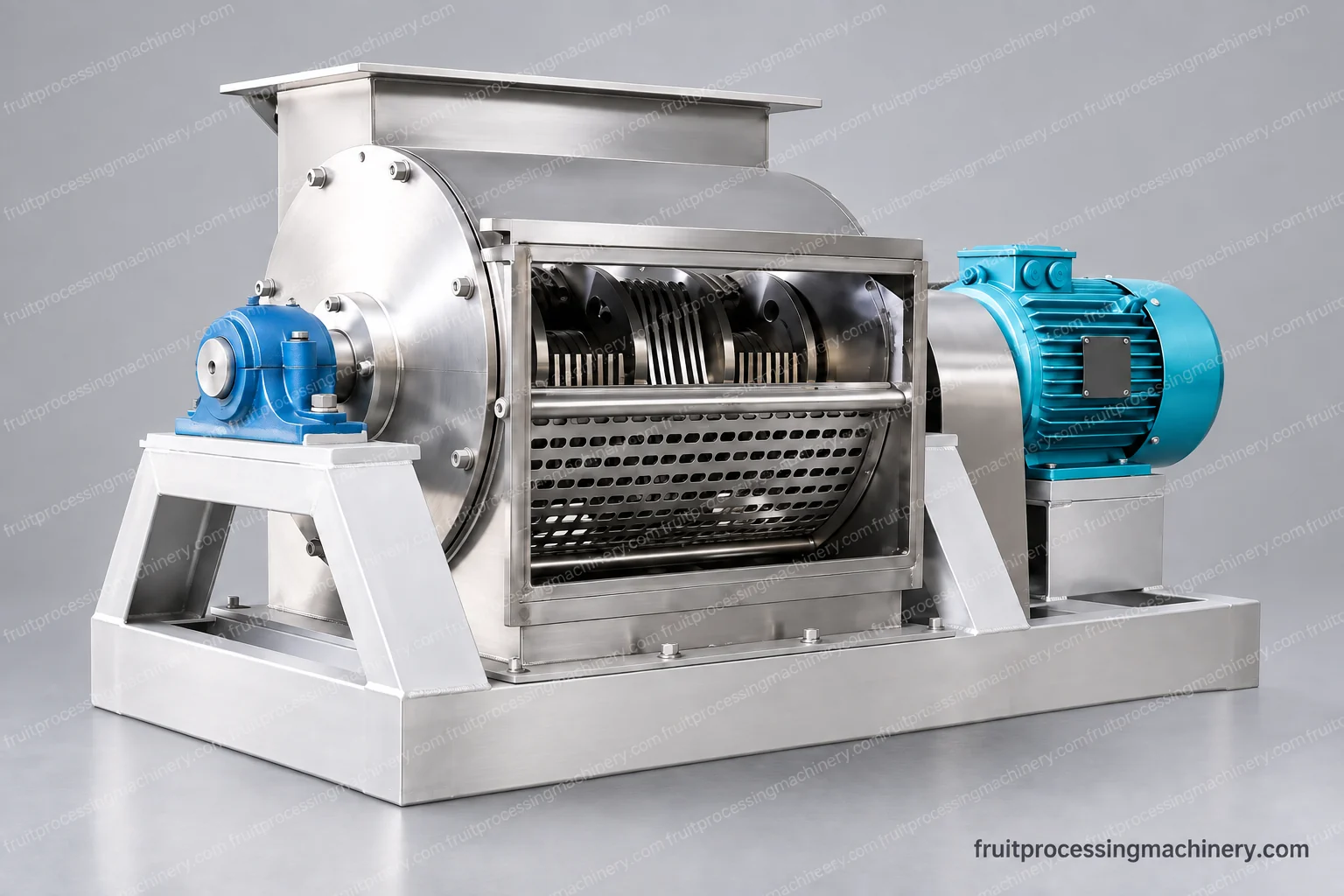
Fruit Crushing Machine
A driven rotor reduces prepared fruit before pulping or a separately selected juice-extraction step.
Compare crushing, destoning, pulping and pressing, then connect the selected product to tanks, thermal equipment and packaging.
Start with the wanted fraction
| Task | Main machine | Wanted output | Decision that matters |
|---|---|---|---|
| Break prepared fruit down | Fruit crusher | Mash for the next operation | Hard-stone removal and downstream feed condition |
| Remove a hard stone | Destoner | Recovered flesh | Stone geometry and flesh attachment |
| Recover and refine pulp | Two-stage pulper | Screened puree | Texture, screen combination and reject paths |
| Express juice | Belt press | Juice plus pressed solids | Mash drainage and belt-wash/solids handling |
These machines are complementary where a route needs them, but their capacities describe different material boundaries.
A driven rotor reduces prepared fruit before pulping or a separately selected juice-extraction step.
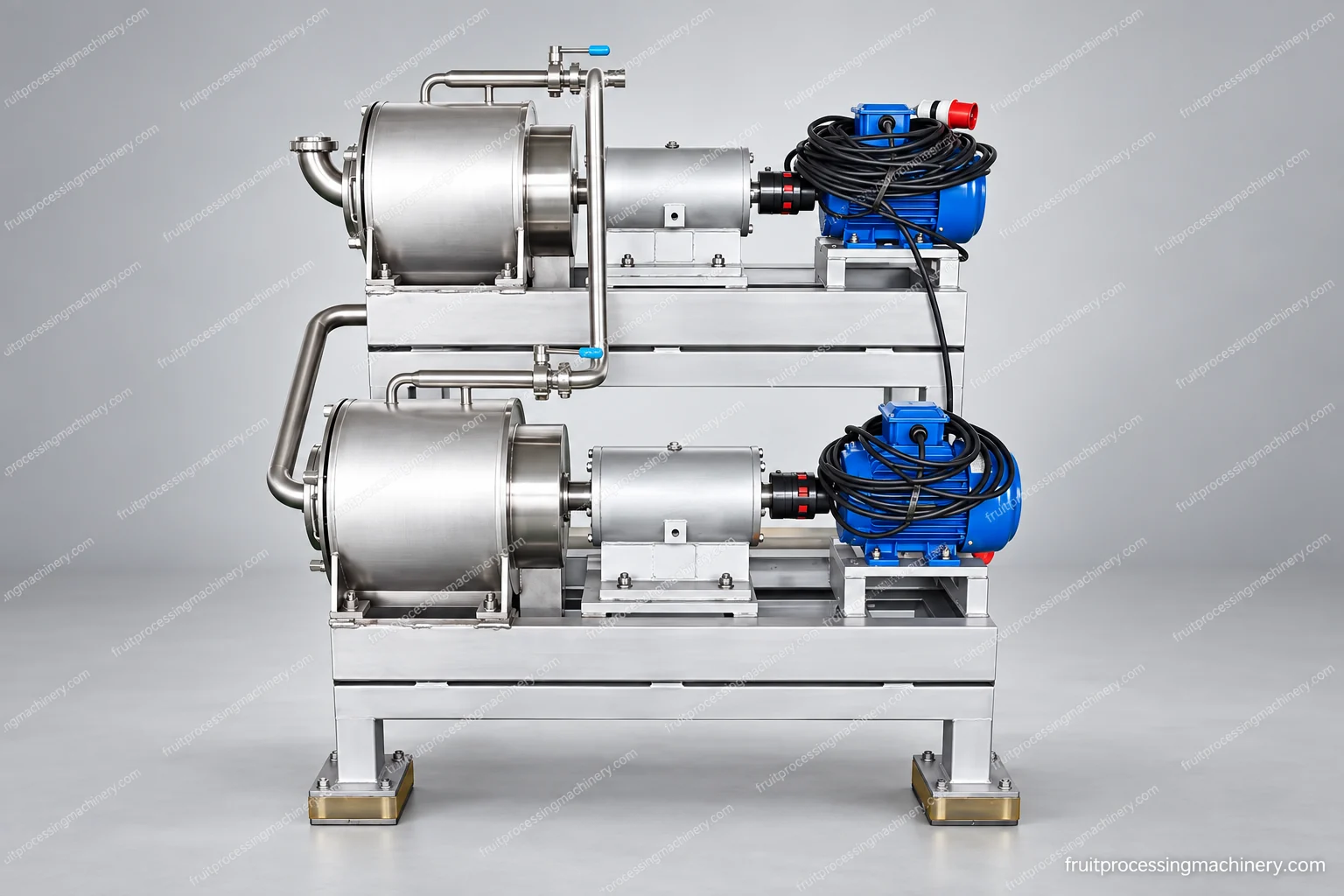
Two cylindrical working stages with separate drives combine pulp recovery and finer screening.
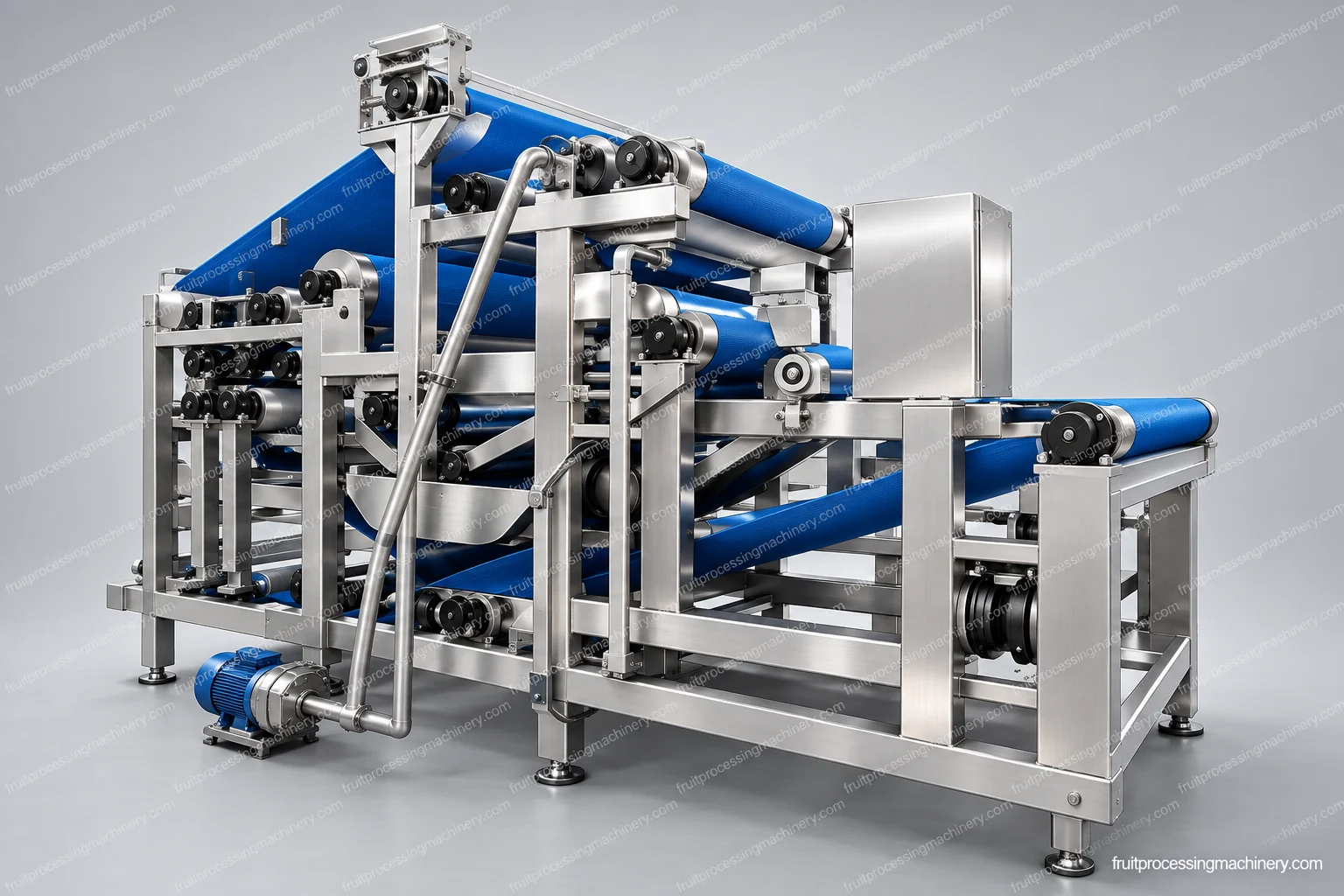
A continuous belt-press family separates juice from a prepared fruit mash through progressive compression.
Then connect the product
State usable volume, holding conditions and the actual fluid. Pump duty includes the complete route and inlet conditions.
Specify product condition, passage and validated operating route. A family temperature range is not a recipe.
Bag volume, fitment, supporting container and upstream availability jointly define the filler configuration.
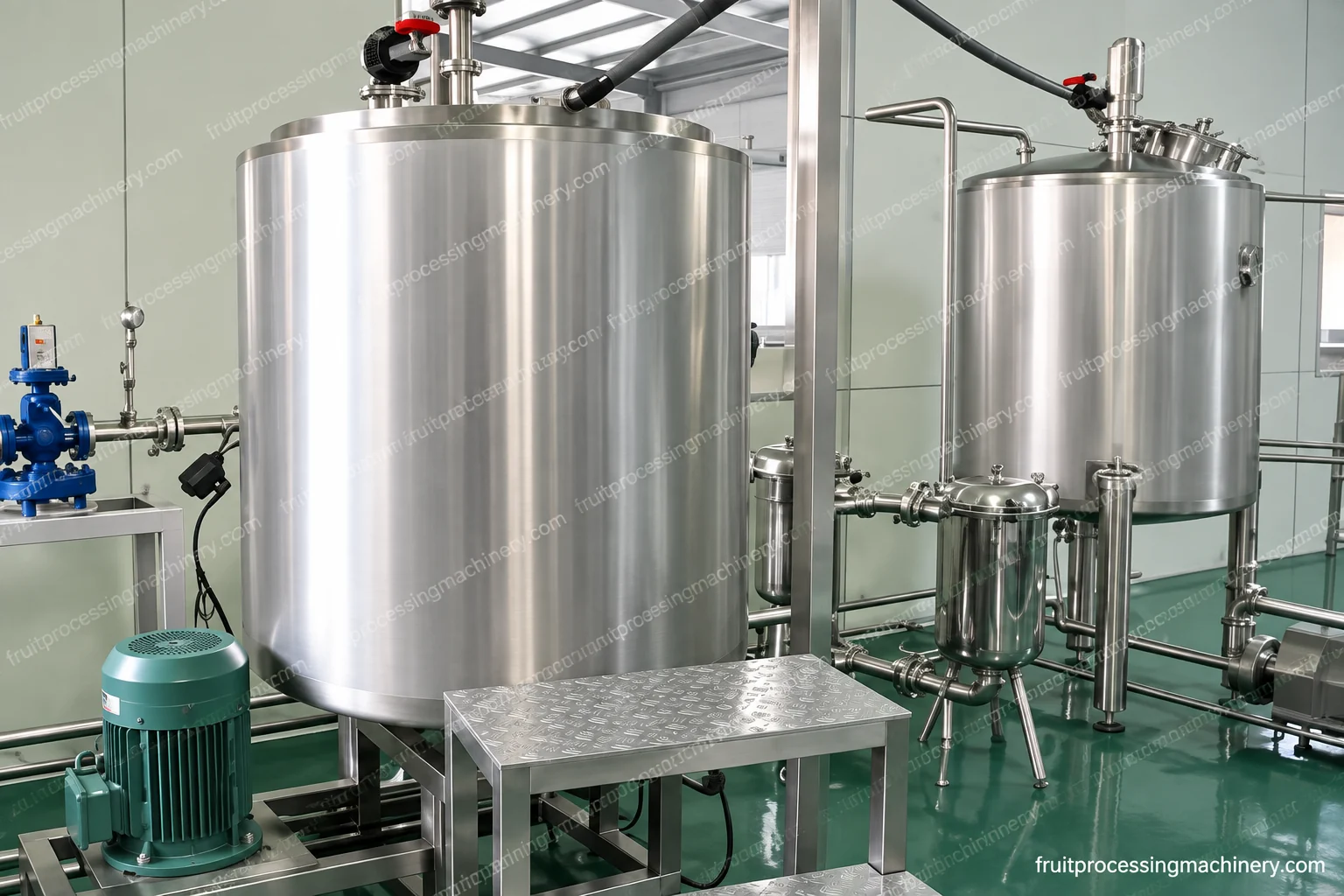
Process vessels and connected transfer equipment collect pumpable fruit product between recovery and continuous treatment.
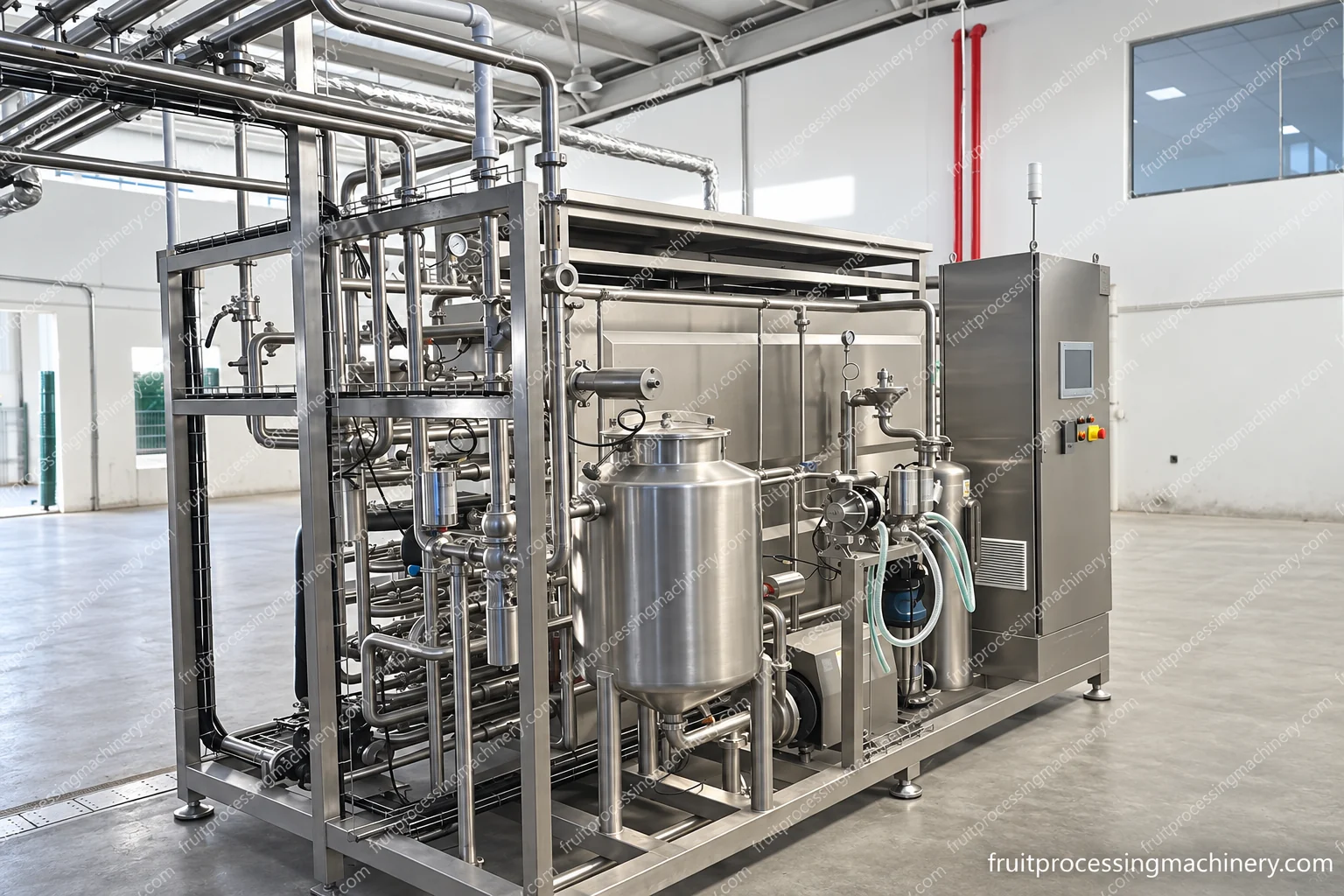
A connected thermal skid brings a suitable pumpable juice or pulp through heating, holding and cooling sections.
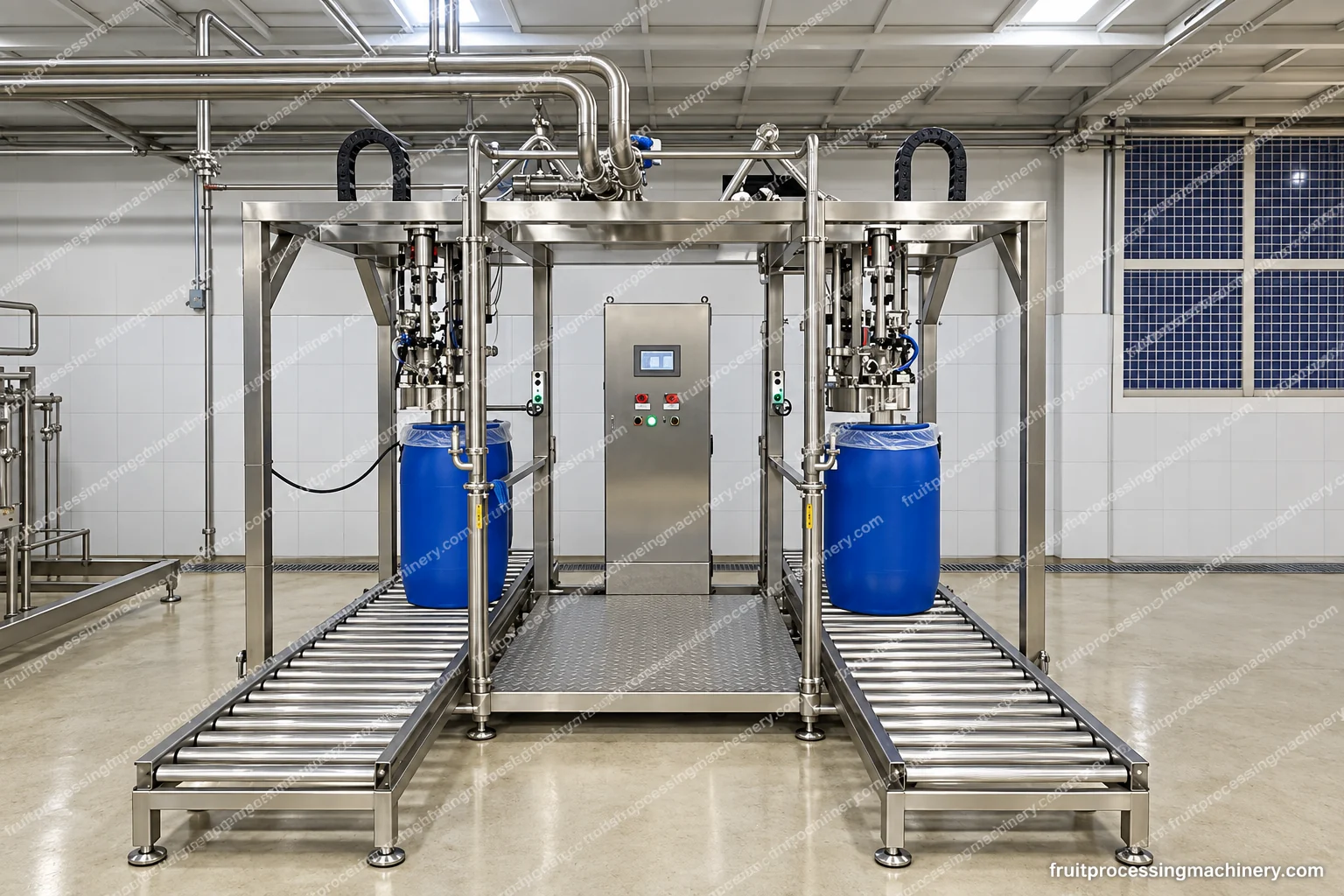
A twin-head bag-filling assembly presents the bag connection to the filling head while the container supports the package below.