Material
Specify what leaves the first machine: fruit, mash, screened pulp or expressed juice. Include rejects and return paths rather than assigning one common flow to every pipe.
Match material condition, transfer geometry, working levels and signal ownership across selected machines.
Joining the machinery
Specify what leaves the first machine: fruit, mash, screened pulp or expressed juice. Include rejects and return paths rather than assigning one common flow to every pipe.
Match transfer levels, connections, required suction conditions and maintenance envelopes. A machine footprint without its access or collection space is incomplete.
Agree when the receiver can accept product and what upstream equipment should do when it cannot. Distinguish a local protection from a line-level request.
| Connection | Mechanical issue | Operating issue |
|---|---|---|
| Washer to crusher | Discharge height and controlled fruit presentation | Pause feed before a receiving hopper overloads |
| Pulper to product tank | Pumpable pulp, fibres, air and reject separation | Match recovery supply to usable receiving volume |
| Tank to thermal skid | Suction condition, product passage and transfer route | Use valid level and process-availability signals |
| Thermal skid to filler | Compatible product inlet and package boundary | Define an unavailable filler and product recovery path |
| CIP station to product circuit | Supply, selected valve route and return | Separate cleaning authorization from product admission |
The buffer has a finite job
Trend supply, demand and tank inventory over the same interval. Available volume can bridge a short interruption inside accepted holding conditions. It cannot correct an average supply deficit or authorize extended product holding.
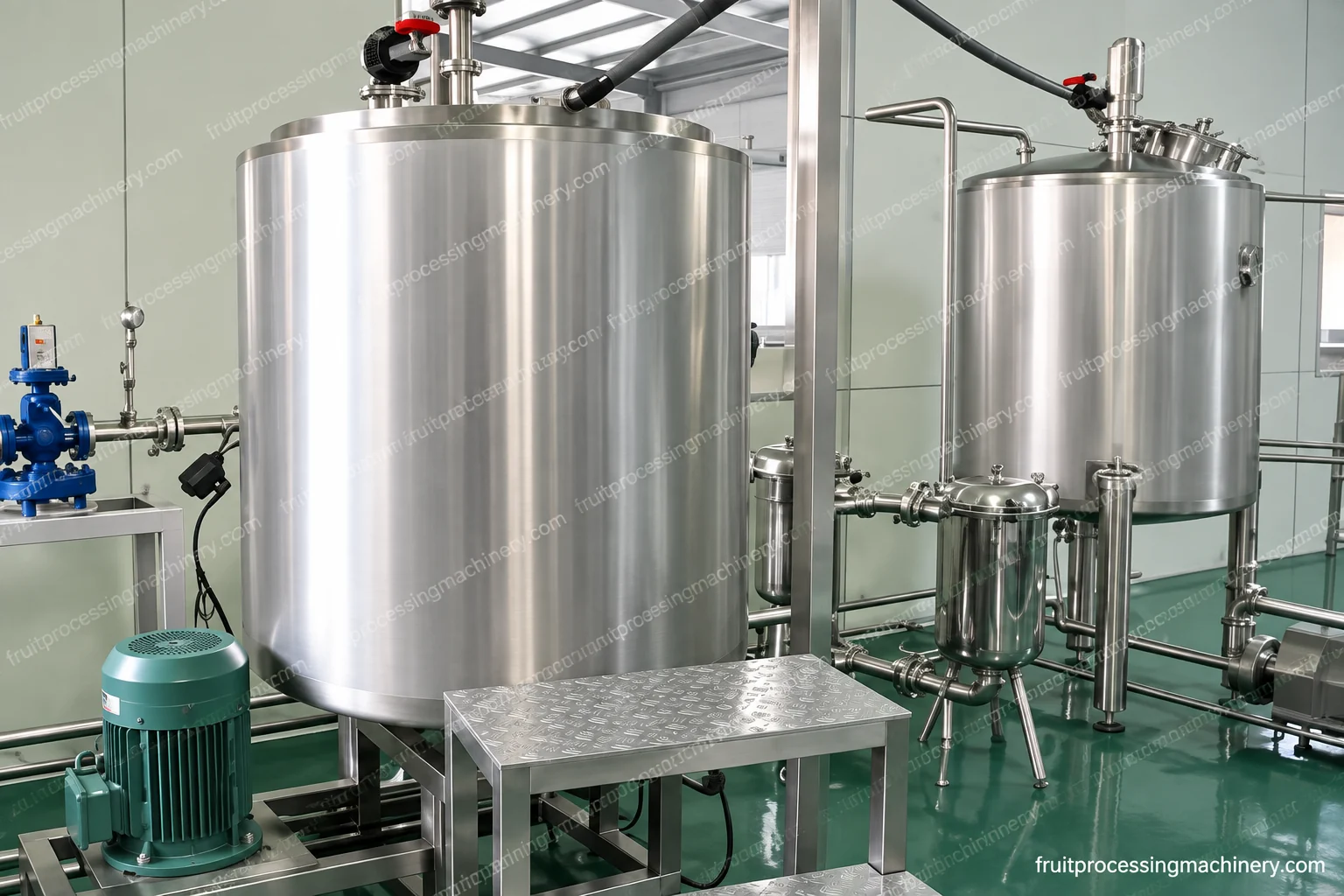
Process vessels and connected transfer equipment collect pumpable fruit product between recovery and continuous treatment.
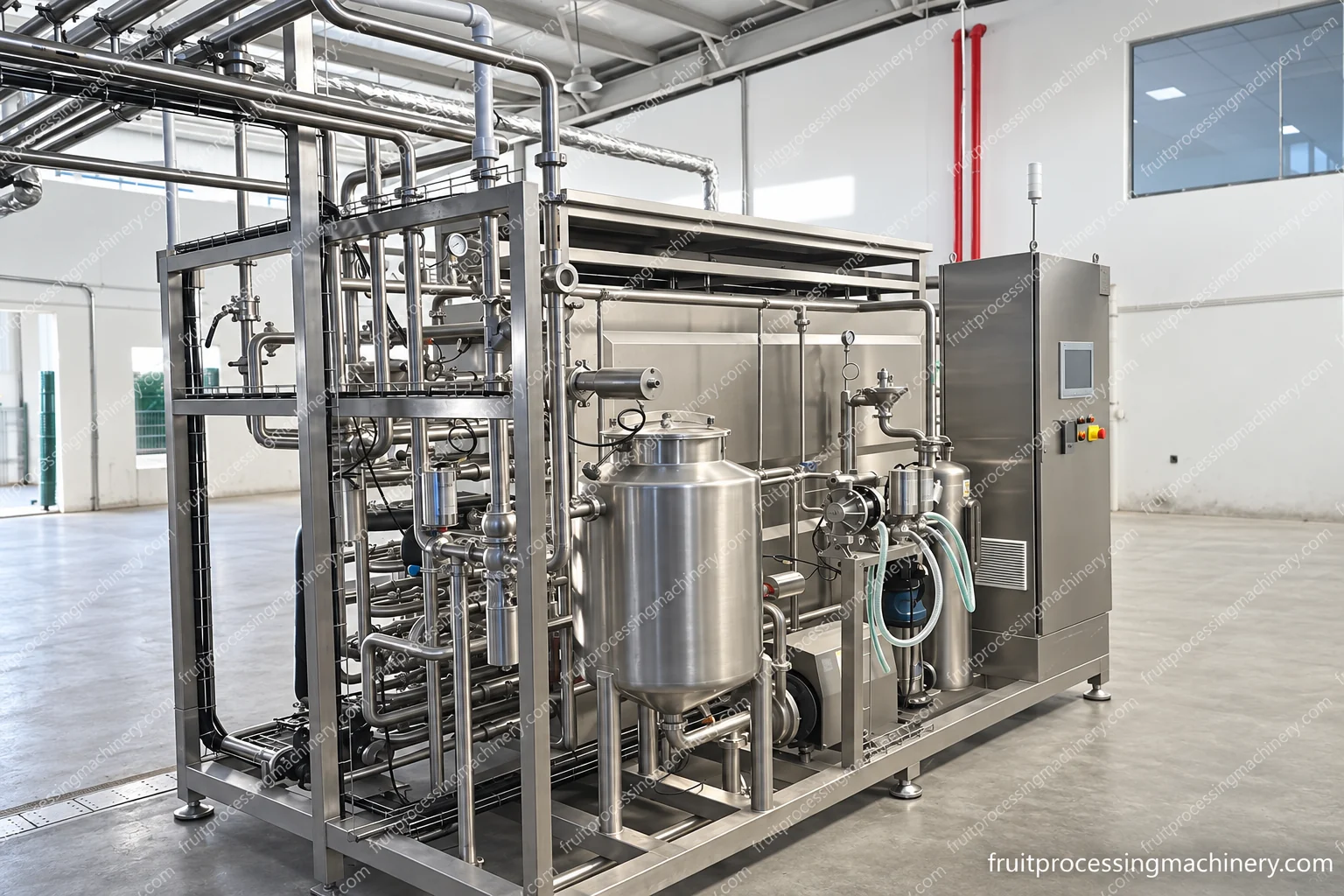
A connected thermal skid brings a suitable pumpable juice or pulp through heating, holding and cooling sections.
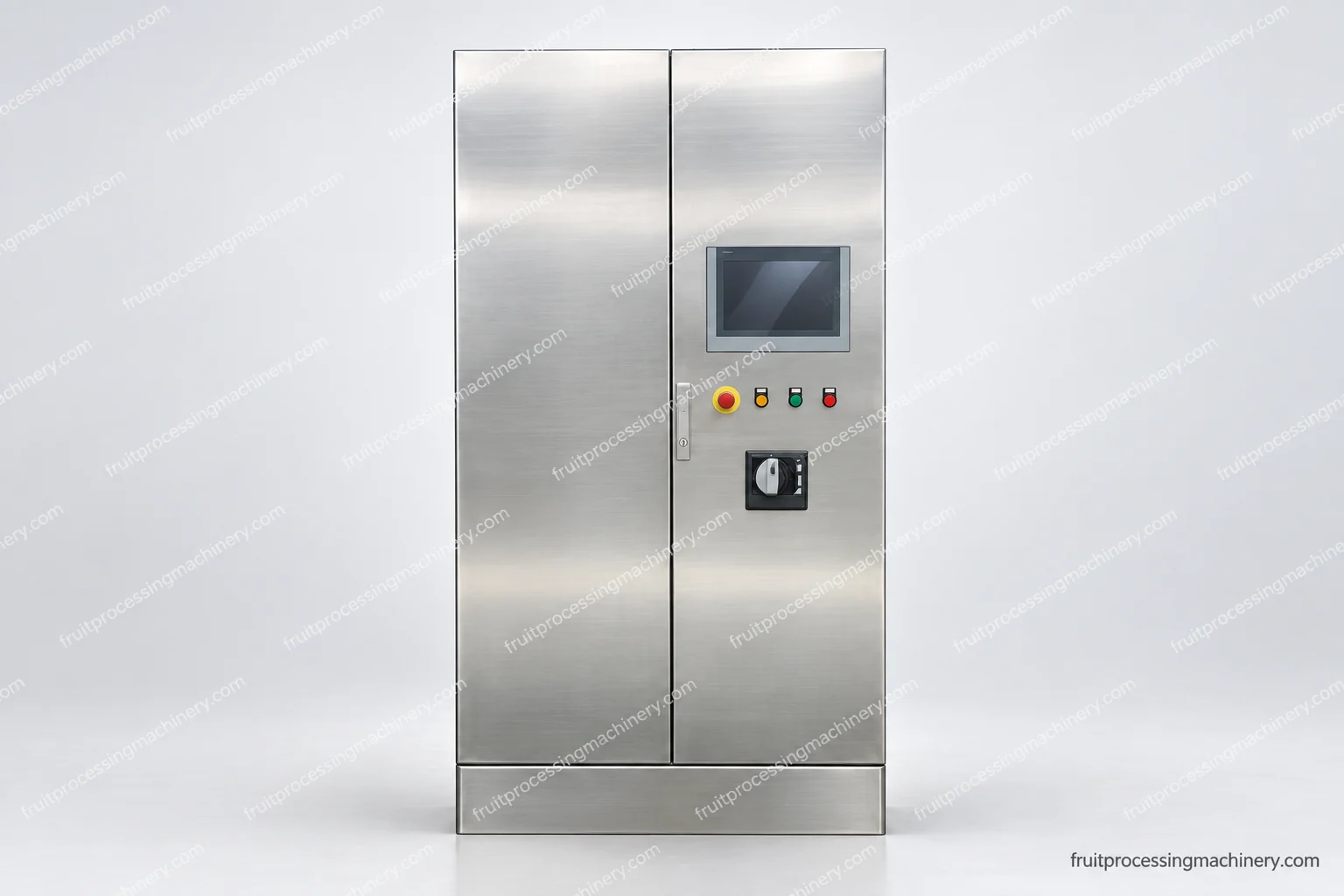
A physical control cabinet with operator screen and local controls provides the interface between selected machines and their operating sequence.
Label the actual equipment and ports consistently across the process drawing, utility schedule, I/O list and test plan. Record retained assets and third-party boundaries so a change to one machine does not silently alter another party's responsibility.