
Unit Operation Engineering — Process Scope And Configuration
Fruit Processing Machinery Integration: Scope, Process and Configuration
Plan fruit processing machinery as connected equipment with defined product handovers, services and control responsibilities. Start from the actual fruit and product schedule, then compare the complete installation scope.
- integrated fruit processing machinery
Project essentials
Start with the operating basis
Map the equipment against the product route
Identify the delivered fruit or intermediate material, the required product and each duty between them. Mark which preparation, processing, transfer and packaging equipment already exists and which belongs in the purchase.
Use the actual project route rather than one assumed conveyor or thermal sequence. Record the material condition and product acceptance requirements at the boundaries of each supplied section.
- Keep campaign and recipe cases identifiable in the brief.
- List unconfirmed process steps before choosing equipment.
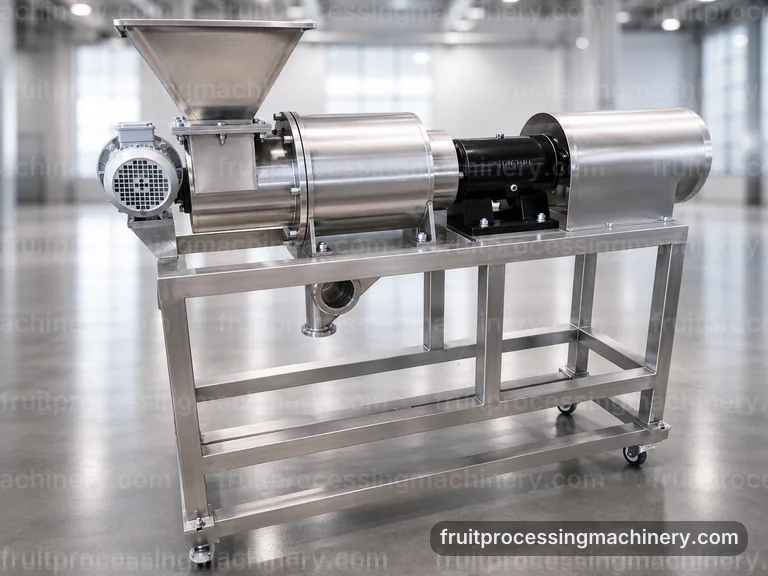
Review the line as a production schedule
Request a stated capacity basis for each relevant stage and record loading, transfer, discharge, changeover and cleaning assumptions. Keep equipment ratings separate from demonstrated accepted output over the agreed schedule.
Ask the responsible team to explain how proposed buffers and operating coordination will be assessed. Their presence in a diagram is not proof that the complete line remains balanced during stops or product changes.
- Identify the observations needed for a representative line trial.
- Keep measured results distinct from proposed capability.
Assign supply and acceptance responsibilities
Separate product connections, utility services, mechanical installation and control signals in the interface schedule. Give each handover an owner and an agreed verification method.
Use the integration and installation guides to turn the machinery list into reviewable project work. Include local connections, commissioning, documentation and support when comparing the complete offer.
- Identify customer-owned equipment and excluded work.
- Record the assumptions behind the selected arrangement.