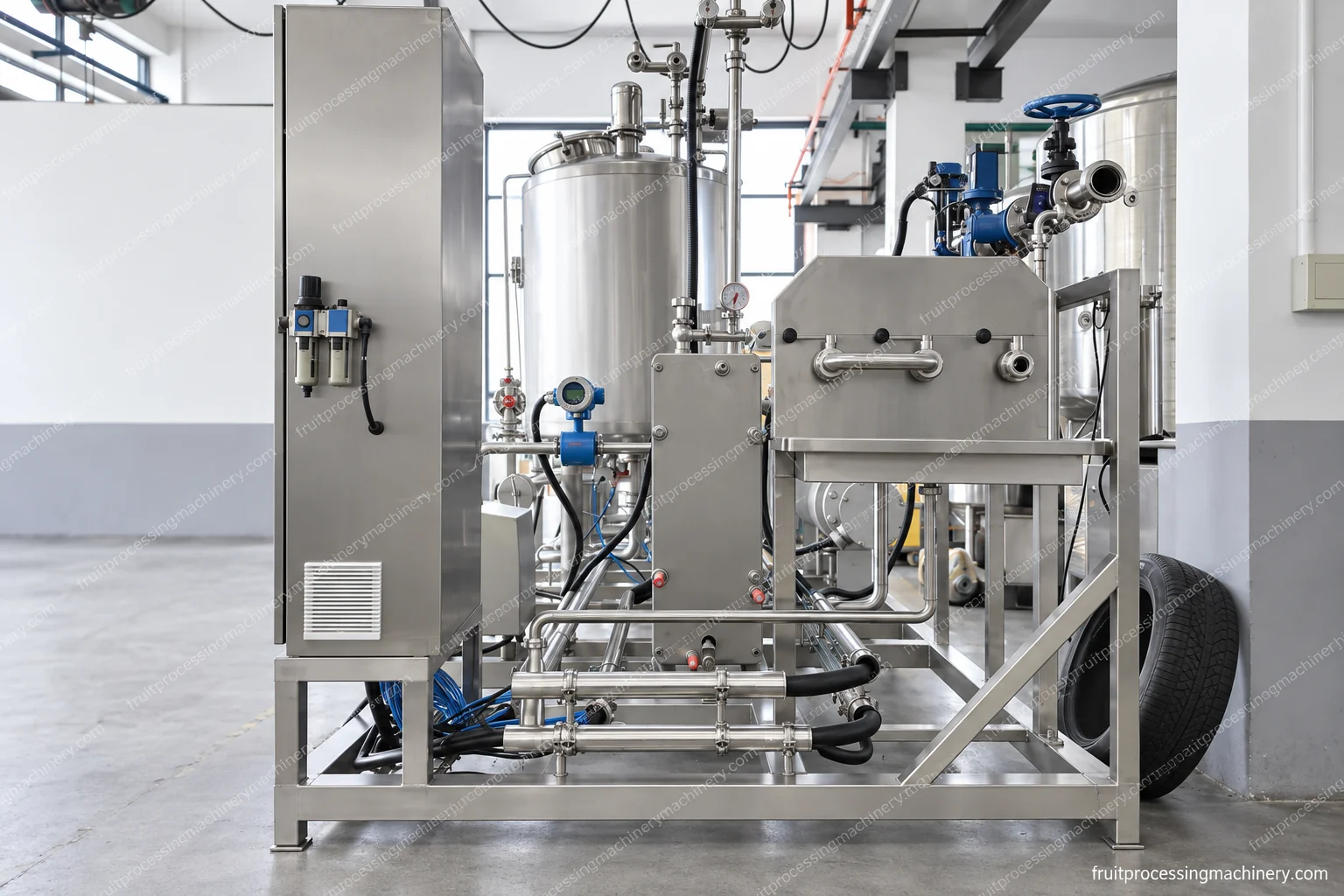
Define the product observations before the test
An acceptance test needs a stated material, a stated preparation and a stated product observation. “Machine runs” is a functional check, not evidence that the equipment meets the intended duty. Before the test, agree the identity of the feed, the operating settings that may be adjusted, the samples to be taken and the person who accepts each result.
Product observations should match the decision being made. For a washer, that may include visible soil removal and fruit condition after contact. For a crusher or pulper, it may include the prepared mash or screened pulp condition and the reject stream. For a thermal or filling boundary, the relevant evidence belongs to the validated process and package, not to a generic machine demonstration.
Record the units and the boundary for every result. A mass rate at the feed hopper is not a packed-product rate; a sample taken from a tank is not a sample from a filler head. Note where the sample was taken, when, and how it was handled. If a supplier's test uses a substitute material, label it as a substitute and explain what it can and cannot demonstrate.
Document accessible cleaning, not just a cleaning claim
Cleaning evidence begins with access. Can the operator reach the product-contact surfaces, remove the screens or guards, inspect the seals and drain the low points? An open brush washer, a conveyor and a pulper with removable screens are not cleaned by the same method as a closed product circuit. A CIP station can supply and recover defined circuits; it does not establish coverage of an open machine.
During acceptance, ask for the cleaning procedure that applies to the supplied equipment and the records that will be kept. Walk the actual installed geometry, including branches, instruments, bypasses and drain paths. A component described as hygienic does not prove that the assembly around it can be cleaned. If a new pump, valve cluster or holding tank changes the circuit, the affected cleaning evidence may need to be repeated.
FDA's juice HACCP guidance treats sanitation and good manufacturing practice as a foundation for the HACCP system, and it expects records to be available for review. That is a useful discipline for handover, not a claim that a machine is certified or that one cleaning cycle fits every product. The site's validated cleaning procedure and release decision remain specific to the installed circuit.
Check the handover package against the quotation
List what the quotation says will be supplied and compare it with what is actually handed over. Typical items include final drawings, the operating and maintenance instructions, the spare-parts list, recommended consumables, instrument calibration information, software backups where applicable, and training records. The list should identify the revision and the party responsible for each item.
Ask how the machine is restarted after a cleaning changeover and who owns each step. Confirm the location of isolation points, the meaning of local indicators and the route for rejects or wash-down waste. A manual that describes a different model, or a drawing without the as-built connection, creates a maintenance problem even when the machine runs.
UNIDO's processing guidance stresses quality assurance alongside production method. In a handover, that translates into documents a site can actually use: a cleaning procedure with access steps, a maintenance schedule tied to the supplied components, and a named contact for unresolved technical questions. A folder of generic brochures is not the same handover.
Separate factory tests from site performance
A factory test can verify assembly, rotation, routing, instrument response and agreed logic under controlled conditions. It can also reveal a missing guard or an inaccessible connection before shipment. It generally cannot prove the machine will handle the site's fruit, utilities, product condition and cleaning regime together. Simulated signals can test a response; they cannot prove that the physical product path behaves as intended.
A site test should use the installed connections and the agreed material. It should include the startup, stop and recovery cases that the project has identified, not only a short steady run. Record deviations with an owner, a proposed correction and the retest that will close them. The acceptance matrix can then show which requirements are demonstrated, which are still open and which depend on a later product or package validation.
FDA distinguishes validation from routine verification: validation collects and evaluates technical information to show that the system will control the identified hazard, while verification confirms that the system is operating as planned. That distinction is useful even outside a HACCP context. A factory demonstration and a site performance run answer different questions, and both should be named accurately.
Close deviations with named owners
Acceptance is not complete while a deviation affecting the intended product, cleaning or safe access remains unresolved. Give each item an owner, a due date and a retest requirement. Separate commercial completion from technical closure if the contract uses those concepts, and make clear which records the site will retain.
The strongest acceptance pack is not the longest one. It is the one a new shift supervisor can use to find the isolation point, the cleaning step, the approved operating boundary and the person to call when a result is outside it. That is the practical meaning of product, cleaning and handover evidence.