Cleaning & line controls
Production Line Control Cabinet
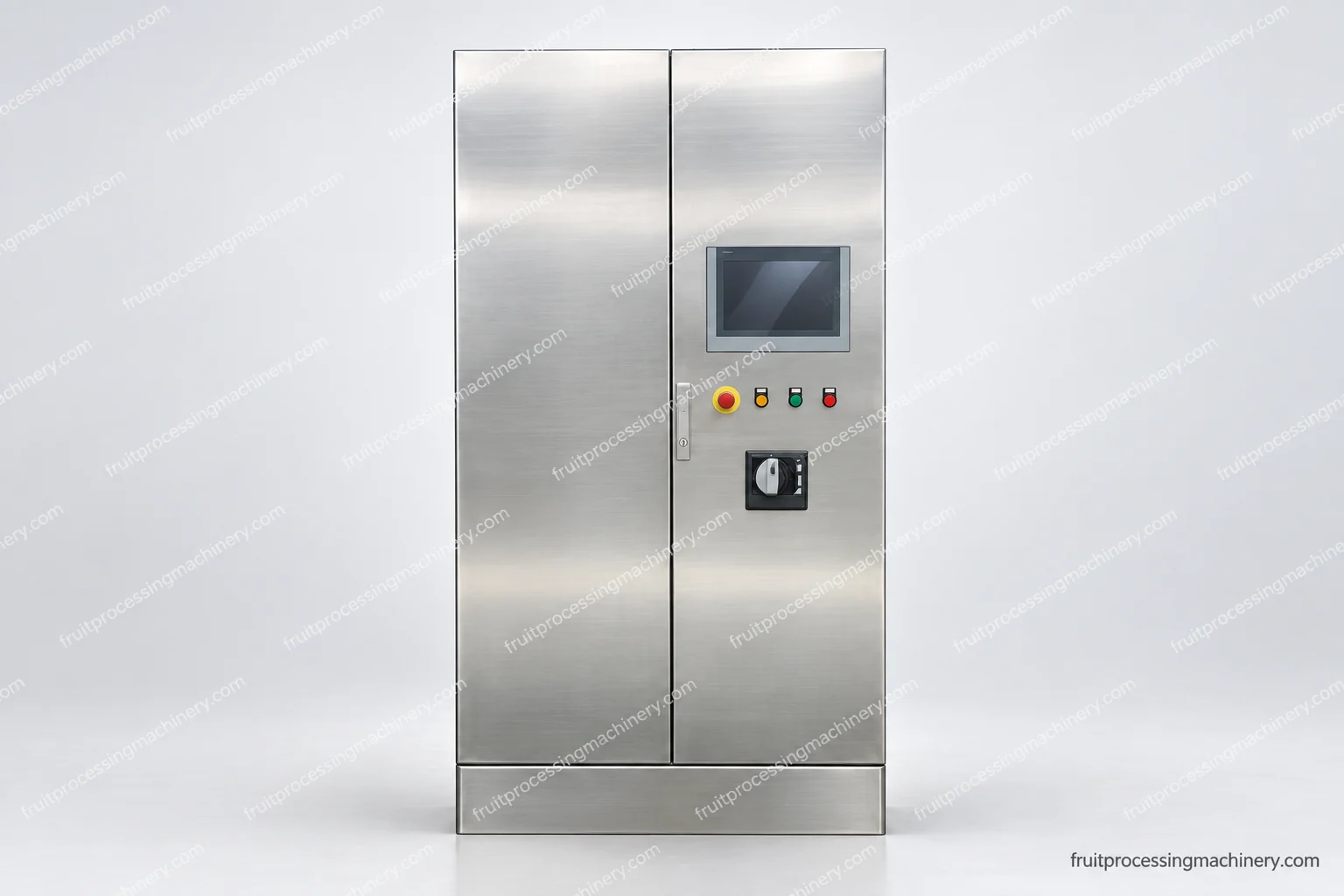
A physical control cabinet with operator screen and local controls provides the interface between selected machines and their operating sequence.
Define responsibilities across independently controlled machines.
Equipment at this boundary
A physical control cabinet with operator screen and local controls provides the interface between selected machines and their operating sequence.
Line coordination is a contract among controllers, not a promise that one PLC can safely control everything. Document the ownership of commands, permissives, faults, modes and resets. Keep safety-rated functions and process validation distinct from ordinary production coordination.
Validated machine states, project demands and permitted operator actions.
Agreed requests, acknowledgements, records and operator information.
Confirm accessible IO/protocols, supported changes, OEM permission and maintenance ownership. Existing machines may expose only limited signals.
Use agreed definitions for ready, running, stopped, cleaning, unavailable and release. Test transitions and disagreement rather than relying on screen labels.
Define route ownership, cleaning-state visibility and release responsibility. A recipe selection is not evidence that the physical circuit is clean.
Functional requirements, interface matrix, backup/restore plan and witnessed acceptance records.
Give the project a trustworthy view of material and machine state.
Make each permitted material path unambiguous.